
According to the California Telehealth Resource Center CTRC, Remote Patient Monitoring now serves as essential infrastructure for healthcare organizations. Their article “Remote Patient Monitoring That Sticks: Turning RPM into a Sustainable Clinical Service Line” provides definitive guidance on how to build sustainable RPM programs.
According to CTRC guidance, healthcare organizations must design RPM programs as structured and repeatable clinical services, not isolated technology deployments.
However, many organizations still launch RPM programs without operational structure. As a result, they face poor scalability and inconsistent outcomes. The CTRC framework clearly shows that technology alone does not drive success. Instead, organizations must build repeatable clinical workflows supported by defined processes and accountability.
Therefore, healthcare leaders must shift their focus toward execution. Adoption no longer represents the primary challenge. Execution determines whether RPM becomes sustainable. Consequently, organizations that align with CTRC standards achieve stronger and more consistent performance.
Five Non-Negotiables That Define Sustainable RPM "CTRC"
As outlined in the California Telehealth Resource Center article, sustainable RPM programs depend on clearly defined operational and clinical components.
The CTRC identifies five essential elements:
- Clear patient selection aligned with specific clinical goals
- Defined clinical workflows for data collection and review
- Assigned roles to manage alerts and patient communication
- Escalation protocols for timely clinical intervention
- Continuous measurement to track outcomes and improve performance
Importantly, organizations cannot treat these elements as optional. Instead, they must integrate them from the beginning. Otherwise, implementation becomes fragmented and ineffective.
For example, many teams collect patient data but fail to define action pathways. Consequently, clinicians cannot respond efficiently. In addition, unclear accountability creates delays and frustration. Therefore, organizations must design RPM programs intentionally rather than improvising them.
Clinical Frameworks Transform Data Into Action
Structured clinical frameworks convert RPM data into actionable care. In fact, the California Telehealth Resource Center emphasizes that performance measurement drives continuous improvement.
Moreover, research published in BMJ Open (2023) shows that RPM programs reduce hospital utilization when teams implement them with defined workflows and targeted patient populations. These findings directly support CTRC guidance.
However, outcomes do not depend on data alone. Instead, program design determines success. Therefore, organizations must combine workflows, roles, and escalation protocols to translate patient data into timely clinical decisions.
Compliance and Sustainability Must Be Built From the Start
Organizations must integrate regulatory compliance and financial sustainability from the beginning. The California Telehealth Resource Center clearly highlights that reimbursement readiness and audit preparedness form core components of RPM design.
Additionally, the Centers for Medicare & Medicaid Services defines RPM as a reimbursable service under specific conditions, including medical necessity and accurate documentation. At the same time, the Office of Inspector General warns about compliance risks related to improper billing.
Therefore, organizations must build transparent workflows and structured reporting systems. As a result, they reduce regulatory risk and strengthen financial performance. Ultimately, sustainable RPM programs balance clinical outcomes with compliance.
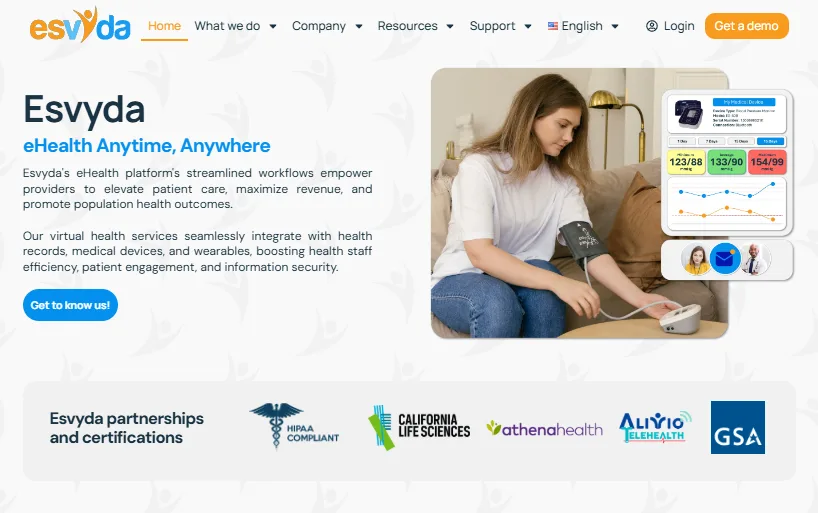
How Esvyda Delivers CTRC Standards in Practice
Esvyda operationalizes CTRC-defined standards through a structured and scalable platform:
- Workflow automation aligned with CTRC-recommended clinical pathways
- Defined roles and alert management systems to support timely intervention
- Seamless EHR integration to reduce administrative burden
- Audit-ready documentation aligned with CMS requirements
- Bilingual patient engagement tools to improve accessibility and adherence
- Intelligent alert prioritization to reduce noise and support decision-making
By aligning directly with California Telehealth Resource Center standards, Esvyda enables healthcare organizations to implement RPM programs that scale efficiently and maintain compliance from day one.
Rural Health Hub
CTRC Standards and Esvyda Define the Future of RPM
Remote Patient Monitoring success depends on structured execution rather than technology alone. The California Telehealth Resource Center provides a clear and practical framework for sustainable implementation.
Therefore, organizations that follow CTRC standards improve care delivery and strengthen operational performance. In addition, they reduce compliance risks and build long-term program stability.
Esvyda delivers a secure, bilingual, and structured platform designed to meet these expectations. As a result, healthcare organizations can scale RPM programs confidently and sustainably.
Download this artice
Remote Patient Monitoring That Meets CTRC Standards
CTRC standards define RPM success. Esvyda delivers structured workflows, compliance, and measurable outcomes for sustainable care programs.
Click Here