
Healthcare organizations have invested heavily in telehealth and remote monitoring. Access to virtual care has expanded significantly across hospitals and clinics. However, technology adoption alone does not guarantee long-term success. According to the Agency for Healthcare Research and Quality, patient engagement remains a critical factor influencing care quality. It is widely recognized as a cornerstone of high-quality person-centered care. Many organizations successfully deploy devices and virtual platforms. Yet, sustaining participation over time remains a major challenge. Patients often disengage due to communication gaps or limited support. Consequently, organizations struggle to maximize their virtual care investments. The future of digital healthcare depends on strong engagement strategies.
Patient Engagement Requires More Than Devices
Many healthcare leaders initially focus on devices and platform implementation. However, sustainable engagement requires a broader operational strategy. According to the Health Resources and Services Administration, rural and underserved communities face significant barriers. These include transportation limitations, broadband access gaps, and provider shortages. These challenges directly affect participation in virtual care programs.
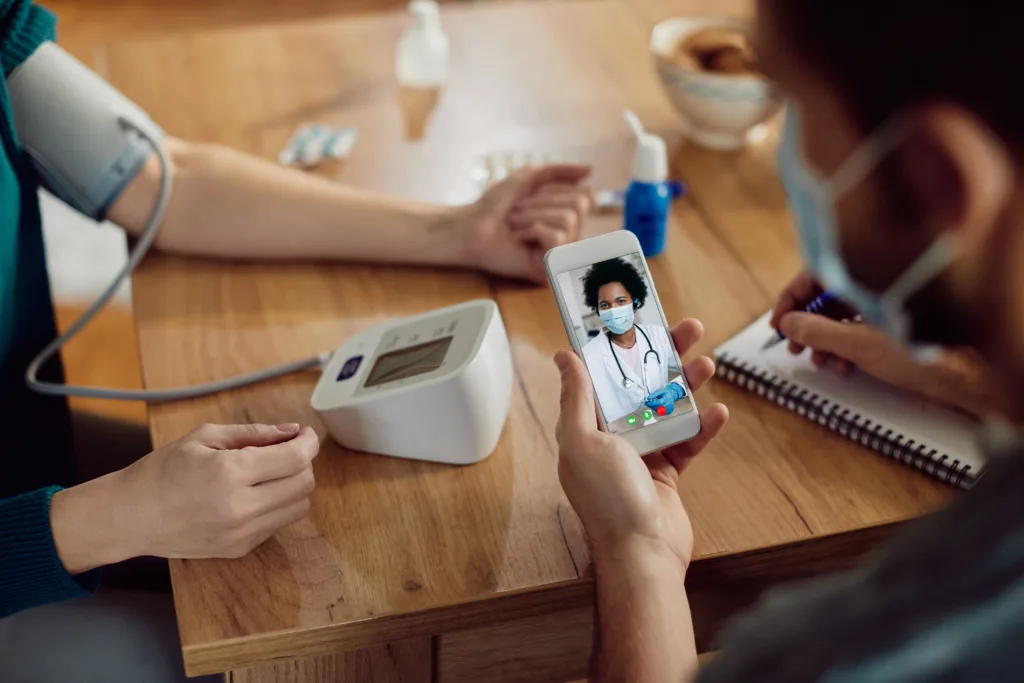
Additionally, patients often encounter difficulties navigating complex enrollment processes. Consequently, organizations experience lower adherence and reduced program effectiveness. Successful virtual care programs prioritize accessibility, simplicity, and ongoing support. Furthermore, they recognize that engagement is not solely the patient’s responsibility. Healthcare organizations must create environments that encourage participation. They must also remove barriers proactively. Patient engagement becomes stronger when technology pairs with communication, education, and personalized care coordination.
Strategies That Improve Outcomes
Healthcare organizations are implementing structured strategies to strengthen patient engagement. The Rural Health Information Hub documents telehealth models designed to increase access and engagement. Several approaches consistently support higher levels of program sustainability:
Simplified onboarding that reduces technical complexity.
Caregiver inclusion to strengthen accountability and support.
Cellular-enabled devices that work without broadband access.
Consistent communication through reminders and follow-up.
Proactive outreach that identifies barriers before disengagement occurs.
These approaches are particularly important in rural communities. Access challenges remain significant in these areas. Organizations using proactive engagement strategies often improve care continuity. They also see higher patient satisfaction rates. Therefore, patient engagement should be viewed as an operational framework. It is not an isolated activity. Sustainable participation requires ongoing interaction and support throughout the patient journey.
Patient Engagement Supports Value-Based Care
Patient engagement directly influences performance across value-based care programs. Organizations increasingly depend on patient adherence and satisfaction metrics. According to the Office of the National Coordinator for Health IT, data-driven decision making plays an increasingly important role in healthcare transformation. Patients who remain connected to their care plans participate more consistently. They also follow recommended interventions more closely. Additionally, engaged patients contribute to stronger communication and improved care coordination. Research published through the National Library of Medicine associates patient engagement with improved health outcomes. Therefore, organizations that prioritize engagement are better positioned to succeed.
Why Esvyda Builds Sustainable Patient Engagement
Esvyda helps healthcare organizations transform patient engagement into a scalable strategy. The platform combines RPM, CCM, population management, and analytics into a unified ecosystem. Esvyda is bilingual, secure, and fully compliant with CMS requirements. Key capabilities include population management tools, automated workflows, and bilingual communication that strengthens accessibility. Clinically, Esvyda facilitates better chronic disease management, improving glycated hemoglobin (HbA1c) and blood pressure control.
These outcomes directly strengthen value-based program metrics and financial predictability. Patients experience higher satisfaction through accessible, culturally responsive bilingual tools. Effective care coordination reduces redundant tasks, allowing teams to focus on meaningful interactions. Moreover, Esvyda optimizes value-based program metrics and enables seamless care coordination across teams. Partner with Esvyda to build sustainable virtual care programs aligned with modern healthcare goals.
Rural Health Hub

Download this artice
Patient Engagement Drives Virtual Care Success
Patient Engagement boosts telehealth results and RPM adherence. Improve care continuity, patient satisfaction, and value-based performance. Esvyda helps healthcare organizations transform patient engagement into a scalable strategy. The platform combines RPM, CCM, population management, and analytics into a unified ecosystem.
Click Here