Healthcare spending in the United States is highly concentrated among a relatively small population. According to AHRQ , the top five percent of spenders accounted for 49.7 percent of healthcare expenditures in 2022. Meanwhile, the bottom half accounted for just 2.8 percent. These figures highlight an important challenge for healthcare institutions. Resources must support patients with widely different clinical needs and patterns of healthcare utilization. However, spending concentration should not become the sole measure of patient complexity. High expenditures may reflect multiple chronic conditions, hospitalizations, expensive treatments, or other healthcare needs. For institutions, the strategic question is how to understand these patterns and organize appropriate support. Better coordination can help teams connect patient needs, clinical information, and follow up activities.
High Cost Patients Are Not Always High Risk Patients
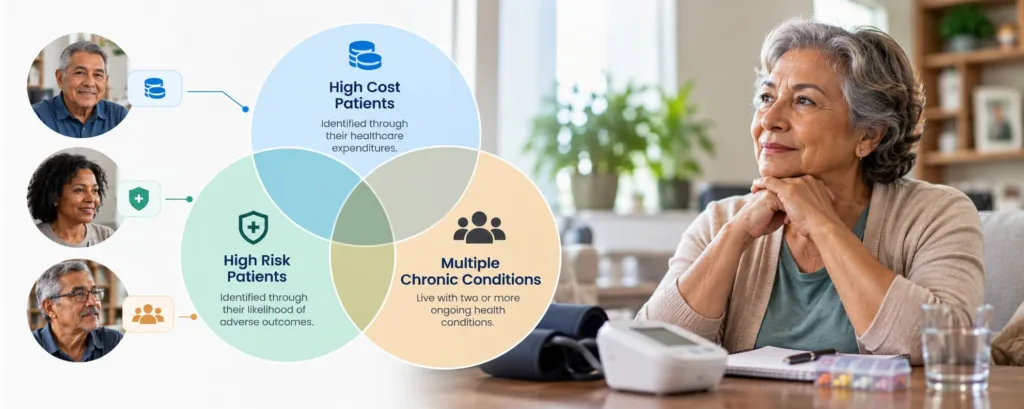
High cost patients, high risk patients, and people with multiple chronic conditions represent overlapping but distinct groups. High cost patients are identified through their healthcare expenditures over a defined period. High risk patients are identified through their likelihood of experiencing adverse outcomes or requiring additional clinical attention. Meanwhile, patients with multiple chronic conditions live with two or more ongoing health conditions. AHRQ found that 75.1 percent of adults in the top five percent expenditure group had at least two priority conditions in 2022. Nevertheless, this association does not mean every high cost patient has the same clinical profile. Healthcare organizations should therefore evaluate expenditure patterns alongside clinical indicators, patient history, and individual needs. This distinction supports more targeted Population Health Management strategies.
Chronic Care Management Requires a Broader Perspective
Managing chronic conditions involves more than addressing individual diagnoses during separate appointments. Patients may require medication management, specialist consultations, ongoing assessment, and support with daily health decisions. When several conditions coexist, these activities can involve multiple professionals and different care settings. Information must reach the appropriate people at the appropriate time. Otherwise, teams may struggle to maintain a complete understanding of the patient’s care journey. AHRQ identifies teamwork, medication management, proactive care plans, and follow up as important care coordination activities. These principles are particularly relevant when institutions serve patients with complex and changing needs. Effective Chronic Care Management connects clinical responsibilities, communication, and monitoring within an organized process. The objective is not simply more contact, but more coherent support around each patient.
High Cost Patients May Need More Than Episodic Care
Scheduled appointments remain essential for diagnosis, treatment, and clinical decision making. However, some patients need complementary support between encounters. Symptoms, physiological measurements, medication concerns, and personal circumstances may change before the next appointment. Without appropriate follow up processes, clinical teams can have limited visibility into those developments. This does not make episodic care inherently ineffective. Instead, it highlights an opportunity to complement visits with targeted communication and ongoing monitoring when clinically appropriate. Organizations can assess which patients need additional contact, what information matters, and who should respond to changes. They can also define escalation procedures and responsibilities across the care team. These processes help connect individual encounters with a more continuous approach to patient management.
High Cost Patients Benefit From Coordinated Care Strategies
Healthcare institutions can strengthen care delivery by aligning support with each patient’s clinical needs. The process begins with identifying populations that may benefit from additional attention. Teams can then establish individualized care plans, clarify responsibilities, and coordinate information across providers. When appropriate, remote monitoring can contribute additional information between scheduled encounters. Communication workflows can also help patients understand care instructions and know when to contact their providers.
Rural Health Hub

AHRQ emphasizes that care coordination involves organizing activities and sharing information among everyone involved in a patient’s care. Technology can support this work, but implementation requires clear processes and accountable teams. Institutions should evaluate whether their workflows connect information with meaningful follow up. This approach supports a more patient centered model without assuming every patient requires the same level of intervention.
Remote Patient Monitoring Supports Connected Chronic Care
Remote Patient Monitoring and Chronic Care Management can support different parts of a coordinated care strategy. CMS describes RPM as a process involving connected devices, transmitted health measurements, clinical review, and treatment management. These activities can provide additional visibility into selected patients’ conditions between appointments. Their value depends on appropriate patient selection, reliable workflows, and clinical responses to relevant information. Chronic Care Management can complement this approach through ongoing care planning, communication, and coordination. Together, these services may help institutions organize longitudinal support for eligible patients with chronic conditions. However, technology alone does not guarantee improved outcomes or reduced spending. Organizations must establish clinical responsibilities, patient engagement practices, and appropriate documentation processes. The goal is to connect monitoring with care delivery rather than treating data collection as an isolated activity.
High Cost Patients Deserve Care Beyond the Numbers
Healthcare expenditure data can help institutions recognize where resources are concentrated, but they cannot explain every patient’s circumstances. Behind these patterns are individuals with different conditions, treatment needs, social circumstances, and preferences. A more coordinated approach begins by understanding those differences and matching support to clinical priorities. Population Health Management can help institutions organize patient information and identify opportunities for more targeted care. Meanwhile, structured communication and appropriate monitoring can help teams maintain visibility between encounters.
Rural Health Hub

CDC provides context on the growing burden of chronic diseases and the need for continuous care. These strategies require more than technology alone. They depend on clear workflows, defined responsibilities, and reliable information sharing across the care team. By focusing on the needs behind the numbers, healthcare institutions can pursue care models that balance patient centeredness, operational visibility, and responsible resource management.
How Esvyda Supports Connected Chronic Care
Esvyda helps healthcare institutions connect Remote Patient Monitoring, Chronic Care Management, patient engagement, analytics, and automated reporting within a connected technology environment. These capabilities align with the operational challenges facing organizations managing patients with complex chronic needs. Teams can use monitoring workflows and available patient information to support ongoing care processes and communication. Esvyda also offers a bilingual platform designed to support communication with diverse patient populations. Its security and compliance positioning can support institutions seeking technology aligned with their operational requirements. The right implementation still depends on clinical protocols, integrations, staffing, and each organization’s needs. For institutions pursuing coordinated chronic care, Esvyda offers a platform to connect patient monitoring with care team workflows. The focus remains clear: understand patient needs, coordinate appropriate support, and make care processes more visible.
Download this artice
High Cost Patients Need Coordinated Care
High Cost Patients need coordinated care strategies that connect chronic disease management, patient monitoring, and clinical teams across healthcare settings.
Click Here